
Using GenAI to increase sales without losing trust
Designing AI as guidance, not a script
Problem
Experts needed strong sales skills; SmartPitch aimed to support them in the moment with tailored guidance without replacing training or crossing into creepy territory.
Solution
We designed AI as high-level context and tone guidance rather than scripts, made the AI visible and transparent, and designed within legal and guardrail constraints.
Impact
SP100 increased meaningfully in pilots; the work reframed how teams think about AI as thoughtful augmentation. It shaped how we guide teams exploring emerging technology.
Sales success depended on skills many experts didn't sign up for
Asurion Field experts are deeply knowledgeable about technology and motivated by helping customers. But to be successful in this role, they also need strong sales skills — something many had to develop through extensive and recurring training.
For experts who weren't natural salespeople, this was taxing. Even with training and best practices, translating what they learned into confident, natural conversations in front of a customer was hard — especially under time pressure. The opportunity wasn't to replace training. It was to support experts in the moment, when it mattered most.
Experts were attracted to this job because they love technology and helping people, but don't always have prior experience selling
Customer data was fragmented across systems and difficult to pull meaning out of
Because this was a new technology, our Legal team had concerns about how we specifically implemented it
THE APPROACH
Why AI could help here, and where it couldn't
We have rich customer data available before a field visit, gathered through call center interactions and device context. That made it possible to tailor sales guidance to individual customers in a way static scripts never could.
However, that data was fragmented across different systems and databases, which made putting it together into something meaningful a challenge in and of itself. Throughout this project, we partnered closely with the data analytics team to improve how and where our customer data is stored and accessed, so that we could show useful insights within Field app.
GenAI offered a way to
- →Surface relevant insights quickly
- →Help experts tailor their pitch to the customer in front of them
- →Reduce reliance on memorized scripts
But this only worked if the content stayed
- →Short and memorable
- →Broad enough to feel natural
- →Carefully designed to avoid crossing into "creepy" territory
The goal was never for experts to read directly from the app. It was to help them internalize guidance and bring it into conversation authentically. We would know if we've done our job well if experts actually spend less time viewing Field app while with customers.
The line between "helpful" and "creepy" was thin
Early explorations made one thing clear very quickly: this could go wrong.
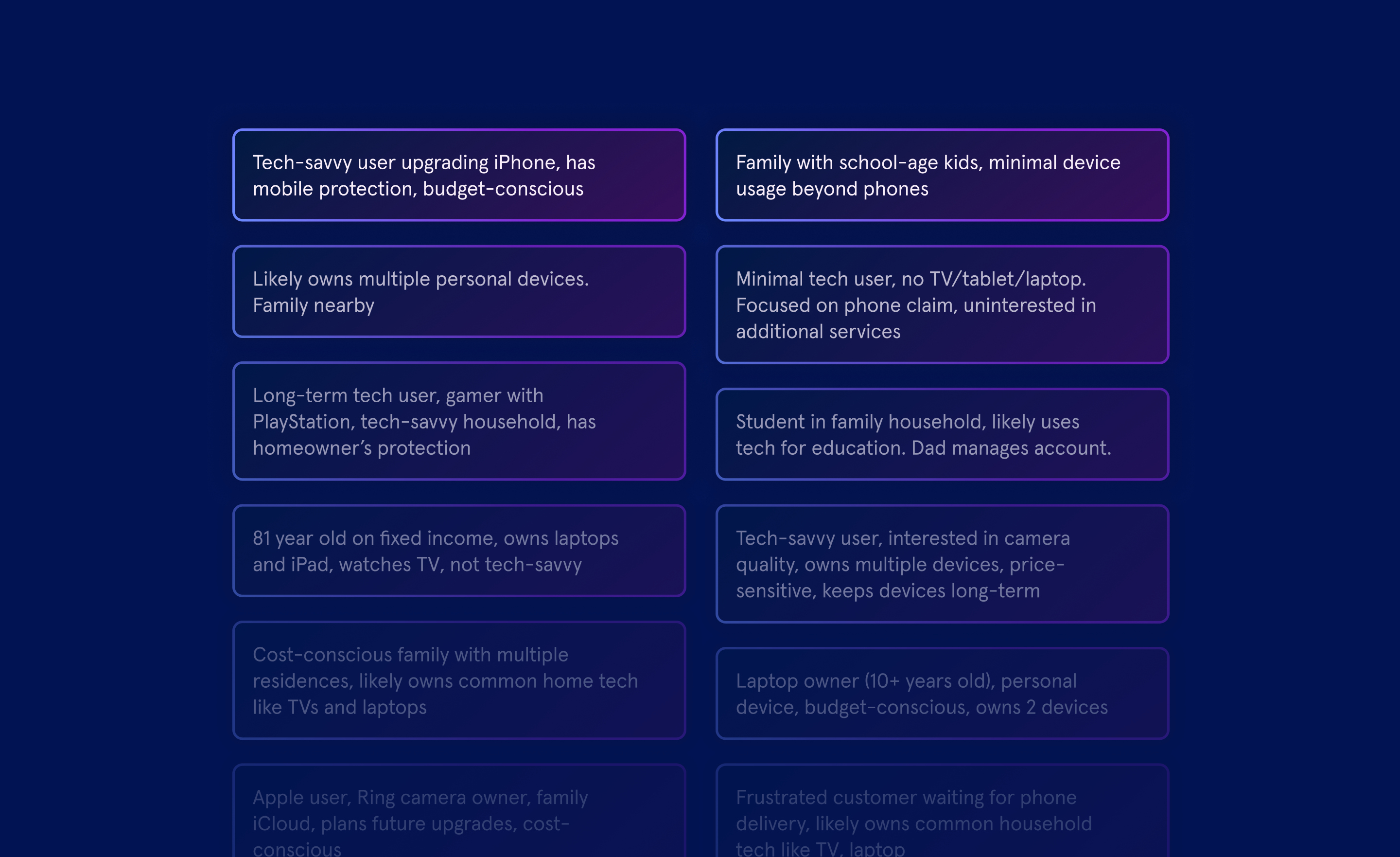
Some early model outputs referenced deeply personal details about customers — how many kids they had, their ages, or specific devices throughout the home. Even if accurate, surfacing that information risked making conversations uncomfortable or unsettling.
A feature designed to help experts could just as easily damage trust with customers.
This became the central design challenge of the project.
Shaping how AI fit into a human conversation
I worked as Senior Manager, Product Design, overseeing one senior designer. My focus was on product strategy, placement within the Field app, and the detailed UI decisions that shaped how SmartPitch appeared and behaved.
I partnered closely with Product, Data Science, Legal, and Engineering to define what insights were appropriate to surface, shape guardrails around tone and specificity, and ensure the experience felt supportive, not prescriptive. Design's role here wasn't just execution — it was judgment.
THE APPROACH
Designing AI as guidance, not a script
We were intentional about what SmartPitch did not do. Instead of full scripts or overly specific recommendations, we focused on:
High-level customer context that could apply across products
Tone guidance rather than exact phrasing
Suggested pitches for a single product, with room to expand later
We iterated through pilots, refining prompts so outputs felt distinct enough to be useful without becoming repetitive — and broad enough to stay comfortable in conversation.
We also made the AI visible but transparent. Experts were told the content was GenAI-generated and given guidance on how to use it, helping them trust the information without over-relying on it.
Constraints shaped the experience as much as the technology
Legal review played a significant role in shaping SmartPitch. There were strict requirements around what experts could say, how products could be positioned, and what claims were allowed. These constraints influenced the language used in prompts and outputs, how insights were framed, and where SmartPitch appeared in the flow.
Rather than fighting those constraints, we designed within them — using structure and clarity to keep the experience safe, compliant, and useful.
THE SOLUTION
How SmartPitch shows up during a job
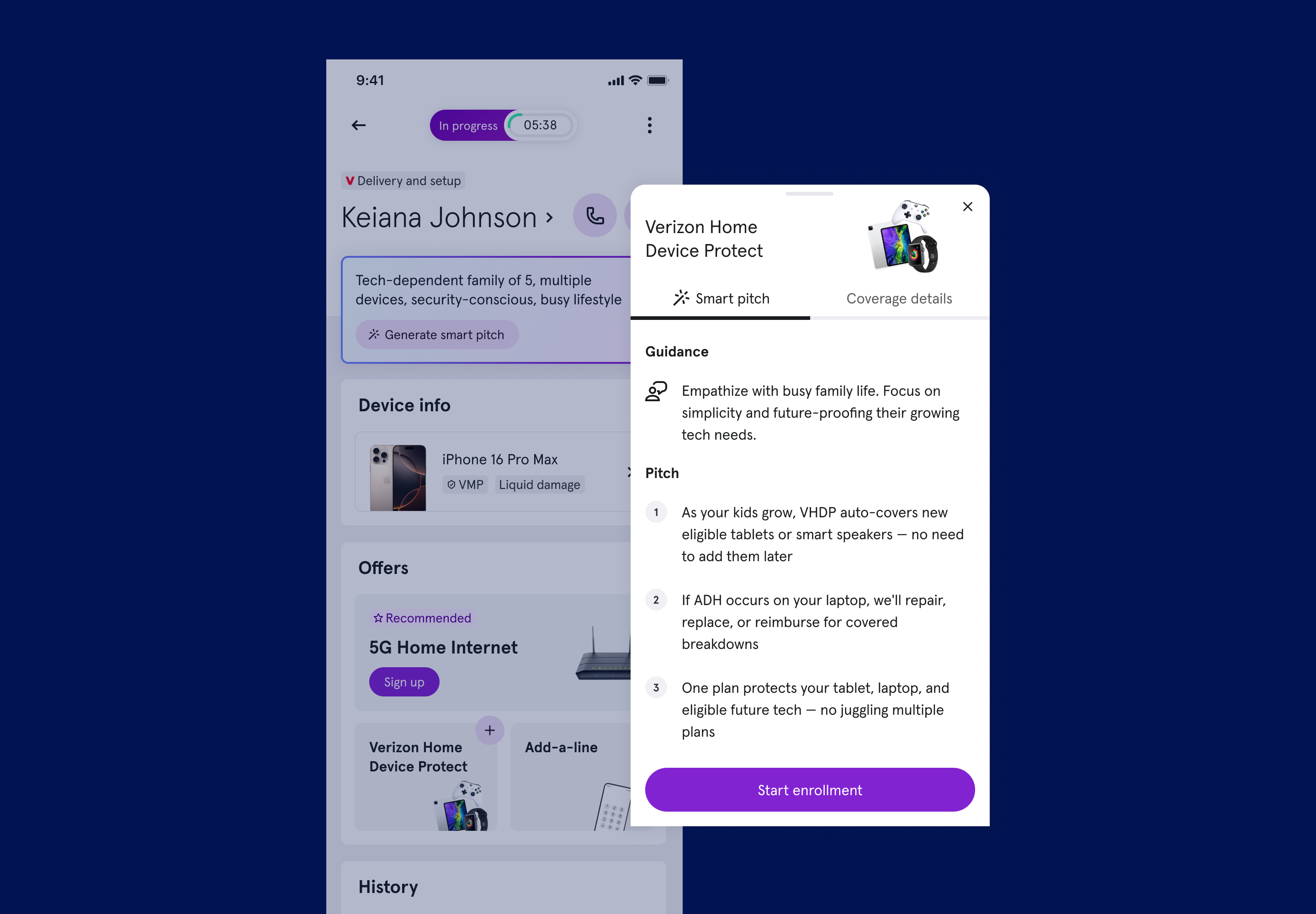
SmartPitch lives directly within the Field app, embedded in the customer's job page.
Experts see
- →A highlighted section with high-level customer insight
- →Tone guidance to shape how they approach the conversation
- →Suggested pitches for one product, with plans to expand over time
The feature is optional, easy to scan, and designed to support — not interrupt — the flow of the job.
THE RESULTS
Measurable results in a hard-to-move metric
Sales impact was significant.
Sales per 100 jobs (SP100) — historically a difficult metric to move — increased meaningfully across roles and markets. In pilots where SmartPitch was used, SP100 jumped dramatically compared to jobs without it.
Even more telling: only about 9% of eligible jobs had a SmartPitch viewed, suggesting significant upside as usage grows.
What success unlocked next
The success of SmartPitch shifted internal confidence in AI-assisted tools. What started as an experiment is now planned for expansion to additional platforms across the company, supporting other expert roles beyond Field, and is a key driver for achieving the company's revenue goals for 2026.
Perhaps more importantly, it reframed how teams think about AI: Not as automation, not as replacement, and not as a chatbot slapped on top of the product, but as thoughtful augmentation when designed with care.
REFLECTION
Key takeaways from designing with AI
This project reinforced that designing with AI is less about capability and more about restraint.
Concise content, clear guardrails, and transparency mattered more than sophistication. Designing for trust — with both experts and customers — was the real challenge.
It was a strong first step in bringing GenAI into Field in a prominent way, and it shaped how I now guide teams exploring emerging technology: start with the human moment, then decide what technology earns a place there.
Fixing a fragmented experience across systems
Asurion & uBreakiFix — 2026
View Next Case Study